

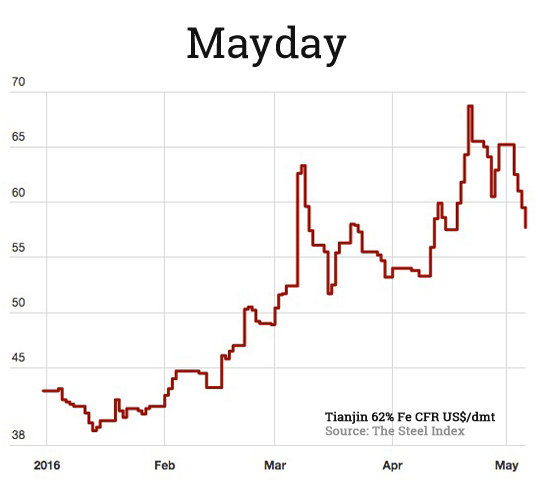
On Friday the Northern China benchmark iron ore price fell 3% to $57.70 per dry metric tonne (62% Fe CFR Tianjin port) according to data supplied by The Steel Index, capping a brutal week of trading.
Losses since Monday came to 11.8%, the worst weekly performance since October 2011, when prices dropped from$142 per tonne to $116 a tonne over five days of trading. Year to date the iron ore price is averaging $51.36 a tonne. Despite the bad start to May, iron ore has managed to hold onto 34% gains in 2016 and a 55% recovery from nine-year lows reached mid-December.
Expectations are for a pullback in Chinese imports due to higher prices during the month and the inventory build-up
Trading on the Dalian Commodities Exchange home to the world’s most active iron ore price futures have quietened down from torrid levels in March and April when one billion tonnes in a single day was recorded. On Friday the most active contract settled at 412.50 yuan or $63.35 for a 9.5% decline on the week.
While coking coal futures traded on the Dalian exchange also suffered double digit declines assessed prices have held up better and was pegged at $97.20 a tonne for premium Australian exports on Friday after coming close to the $100 mark at the end of April. Metallurgical coal has gained nearly 20% year to date and is well up on historically low $73.40 a tonne in December on a spot price basis.

Chinese commodity import data set to be released over the weekend would give further indication of the direction of prices.
Chinese steel mills continue to opt for seaborne cargoes which now make up nearly 80% of blast furnace feedstock. For the first quarter imports are up 6.5% year on year despite weather-related disruptions at Port Hedland in West Australia, the world’s busiest dry bulk terminal. In December imports reached a record 96 million tonnes and cargoes for the whole of 2015 also set a new record of 952.7 million tonnes.
After a dismal 2015 when China imported 48 million tonnes, down 23% from the year before, coking coal imports have recovered strongly this year. Imports surged 72% year on year to just over 5 million tonnes in March and is up 5% for the first quarter.
Expectations are for a pullback in April due to higher prices during the month and the inventory build-up.