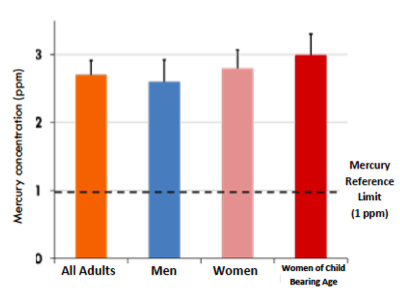
A new study of mercury contamination in fish and humans in the Peruvian jungle, highly troubled by illegal gold mining, found unsafe levels of the toxic metal in almost 80% of adults and 60% of fish sold at local markets.
The analysis, conducted in Peru’s southeastern region of Madre de Dios by the Carnegie Institution for Science, concludes the scope and intensity of mercury contamination by illegal gold diggers there is a “grave and mounting threat to public health.”
For almost two years the Peruvian government has been trying to tighten the screws on illegal mining, while scientists monitoring its impacts are on the front lines of a seemingly ongoing battle between miners, environmental activists and the authorities.
In February last year, Peru’s mining ministry banned mining in Madre de Dios outside a designated 500,000-hectare corridor and ordered all miners to register by April 2014.
The process, for which the original deadline was in March this year but then had to be extended, requires miners to produce a work plan, as well as an environmental impact assessment and a clean-up strategy, among other requirements.
The plan has not been totally welcome by the artisanal miners, triggering fresh protests across the country that have already cost the lives of two people this month. In March last year, three people died as police clashed with federation-organized protests involving about 15,000 people. The government began raiding mining camps outside the corridor, but in many of those areas miners have since returned to work.